Introduction
Social media has become an essential part of digital marketing. Platforms like Instagram, Facebook, LinkedIn, and YouTube help businesses connect with their audiences, promote products, and build brand awareness. However, posting content without a proper plan can lead to inconsistent uploads, low engagement, and missed marketing opportunities.
A 30-day social media content calendar helps you organize your ideas, schedule posts, and maintain a consistent online presence. Whether you are a beginner, a content creator, or a business owner, creating a monthly content calendar can make your social media marketing more effective.
In this blog, we will explore how to create a 30-day social media content calendar step by step.
1. Define Your Social Media Goals
Before creating your content calendar, decide what you want to achieve. Your goals will guide the type of content you publish and the platforms you use.
Common social media marketing goals include:
- Brand awareness: Introduce your business to more people.
- Engagement: Encourage likes, comments, shares, and conversations.
- Website traffic: Bring visitors to your website or blog.
- Lead generation: Collect inquiries from potential customers.
- Sales growth: Promote products and encourage purchases.
For example, if you run a digital marketing page, your goal might be to increase followers, educate beginners, and generate inquiries for your services.
Choose two or three measurable goals for the month rather than trying to achieve everything at once.

2. Understand Your Target Audience
Your content will perform better when it addresses your audience’s interests, problems, and questions.
Identify details such as age group, interests, professional background, preferred social media platforms, and the challenges your audience faces.
For example, if your audience consists of digital marketing beginners, you could create content about SEO basics, Google Ads, content marketing, AI tools, and Instagram growth strategies.
You can learn more about your audience by reviewing social media insights, reading comments, conducting polls, and analyzing frequently asked questions.

3. Choose Your Content Pillars
Content pillars are the main topics around which you create your social media posts. They help keep your content organized and prevent your page from becoming repetitive.
Here are five useful content pillars for a digital marketing page:
- Educational content: Tutorials, tips, and how-to guides.
- Trending content: Industry updates, new tools, and relevant trends.
- Engagement content: Polls, quizzes, and questions.
- Personal or behind-the-scenes content: Your learning journey, work process, and experiences.
- Promotional content: Your services, products, achievements, and offers.
A balanced content mix allows you to educate your audience, build trust, and promote your business without making every post feel like an advertisement.

4. Select the Right Social Media Platforms
You do not need to publish on every social media platform. Choose the platforms that best match your audience and content format.
- Instagram: Reels, carousels, Stories, and visual content.
- Facebook: Community posts, videos, and business promotions.
- LinkedIn: Professional insights, industry knowledge, and case studies.
- YouTube: Tutorials, educational videos, and detailed explanations.
For beginners, focusing on one or two platforms is often more manageable than trying to maintain all of them simultaneously.

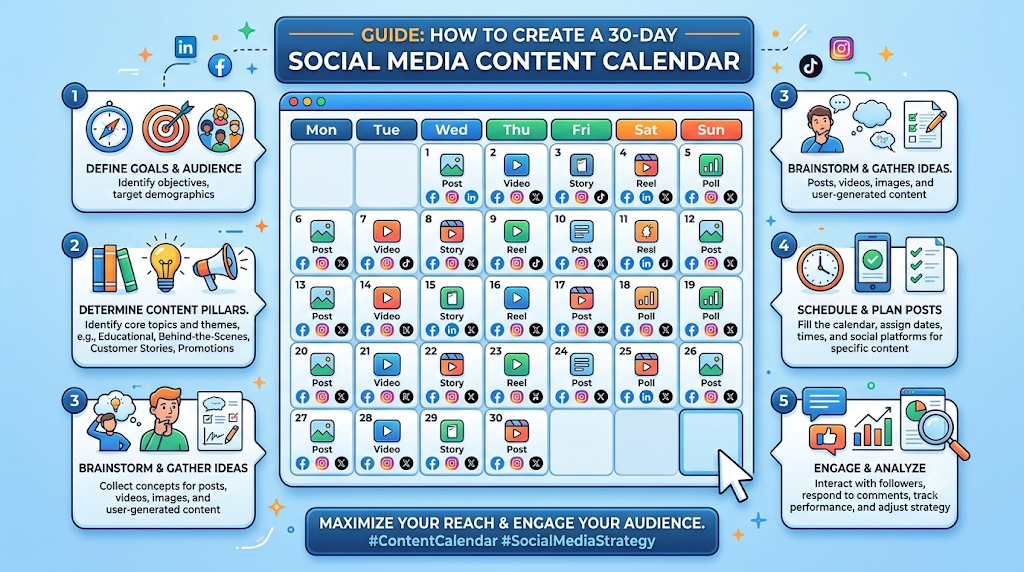
5. Plan Your 30-Day Content Calendar
Once you have defined your goals, audience, and content pillars, start assigning topics to specific days.
Here is an example of a 30-day content calendar for a digital marketing page.
| Day | Content idea | Format |
|---|---|---|
| 1 | Introduction to digital marketing | Carousel |
| 2 | Three SEO tips for beginners | Reel |
| 3 | What is content marketing? | Static post |
| 4 | Quiz about digital marketing | Story |
| 5 | Best AI tools for marketers | Carousel |
| 6 | Common SEO mistakes | Reel |
| 7 | Weekly learning recap | Story |
| 8 | Google Ads explained | Carousel |
| 9 | Social media growth tips | Reel |
| 10 | Digital marketing myths | Carousel |
| 11 | Ask your audience a question | Story |
| 12 | Email marketing basics | Static post |
| 13 | Website optimization tips | Reel |
| 14 | Share a useful industry update | Carousel |
| 15 | How keyword research works | Reel |
| 16 | Benefits of content marketing | Carousel |
| 17 | Behind the scenes of your work | Story |
| 18 | Affiliate marketing explained | Static post |
| 19 | Tips for better Instagram captions | Reel |
| 20 | Digital marketing case study | Carousel |
| 21 | Weekly tips recap | Story |
| 22 | Introduction to performance marketing | Carousel |
| 23 | How to write a blog post | Reel |
| 24 | Marketing tools comparison | Carousel |
| 25 | Frequently asked questions | Story |
| 26 | Personal branding tips | Reel |
| 27 | Common social media mistakes | Carousel |
| 28 | Lessons learned this month | Static post |
| 29 | Audience poll or quiz | Story |
| 30 | Monthly recap and next month’s preview | Reel |
This is a sample plan, not a requirement to post every day. Adjust the frequency according to your resources, audience response, and platform insights.