In today’s competitive digital world, online advertising is one of the most effective ways to reach potential customers, generate leads, and increase sales. Two of the most popular advertising platforms are Google Ads and Meta Ads. Both offer powerful marketing opportunities, but they work differently and serve different business goals.
If you are a business owner, marketer, or entrepreneur, understanding the difference between Google Ads and Meta Ads can help you choose the right advertising strategy. In this blog, we will compare both platforms, explore their advantages, and explain which one is better for your business.
What Are Google Ads?
Google Ads is an online advertising platform that allows businesses to display advertisements across Google Search, YouTube, Google Maps, and participating websites and apps.
One of its biggest advantages is that it helps businesses reach people who are actively searching for particular products or services.
For example, if someone searches for “best digital marketing agency near me,” a marketing agency can display a relevant search advertisement to attract that potential customer.
Key benefits of Google Ads:
- High purchase intent: Reach people who are actively looking for solutions.
- Multiple ad formats: Use search, display, shopping, video, and other campaign types.
- Measurable performance: Track clicks, conversions, leads, and sales.
- Flexible budgeting: Set campaign budgets and adjust bids based on performance.
Google Ads is particularly useful for service-based businesses, e-commerce stores, educational institutions, and companies that want to capture existing customer demand.

What Are Meta Ads?
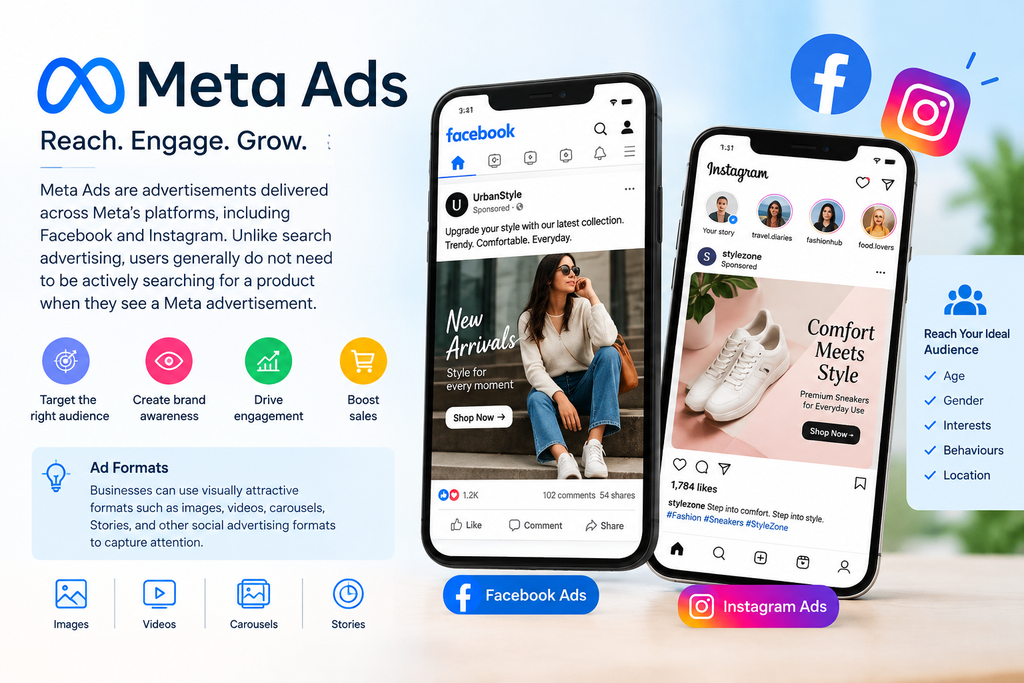
Meta Ads are advertisements delivered across Meta’s platforms, including Facebook and Instagram. Unlike search advertising, users generally do not need to be actively searching for a product when they see a Meta advertisement.
Meta Ads are highly useful for reaching specific audiences and creating awareness around a brand, product, or service. Businesses can use visually attractive formats such as images, videos, carousels, Stories, and other social advertising formats to capture attention.
For businesses with visually appealing products, lifestyle brands, e-commerce stores, creators, and companies looking to build a strong social presence, Meta Ads can be an effective marketing channel.
Google Ads vs Meta Ads: Key Difference
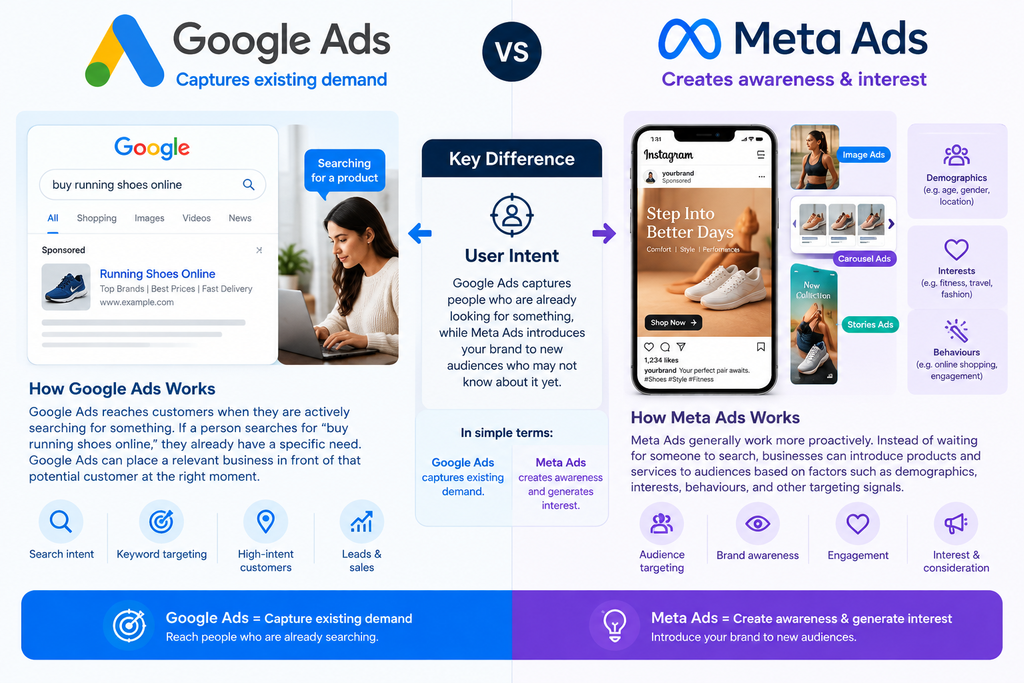
The biggest difference is user intent.
Google Ads often reaches customers when they are actively looking for something. If a person searches for “buy running shoes online,” they already have a specific need. Google Ads can place a relevant business in front of that potential customer at the right moment.
Meta Ads generally work more proactively. Instead of waiting for someone to search, businesses can introduce products and services to audiences based on factors such as demographics, interests, behaviours, and other targeting signals.
In simple terms, Google Ads can help capture existing demand, while Meta Ads can help create awareness and generate interest.
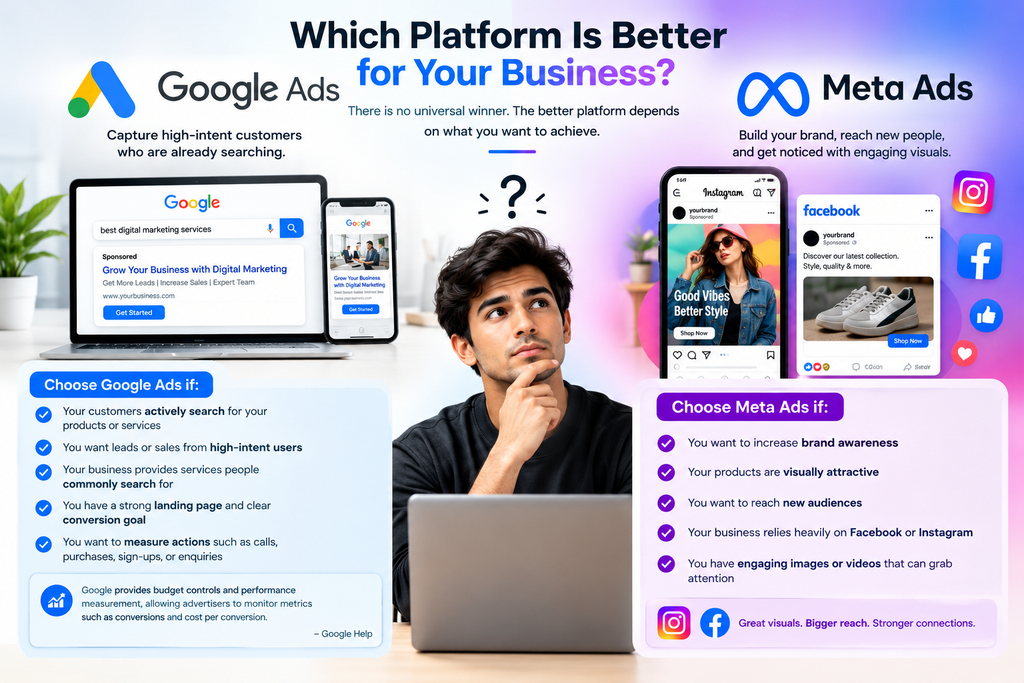
Which Platform Is Better for Your Business?
There is no universal winner. The better platform depends on what you want to achieve.
Choose Google Ads if:
- Your customers actively search for your products or services
- You want leads or sales from high-intent users
- Your business provides services people commonly search for
- You have a strong landing page and clear conversion goal
- You want to measure actions such as calls, purchases, sign-ups, or enquiries
Google provides budget controls and performance measurement, allowing advertisers to monitor metrics such as conversions and cost per conversion. Google Help
Choose Meta Ads if:
- You want to increase brand awareness
- Your products are visually attractive
- You want to reach new audiences
- Your business relies heavily on Facebook or Instagram
- You have engaging images or videos that can grab attention